
Oldroyd’s masterpiece
A Batley son defies the sun

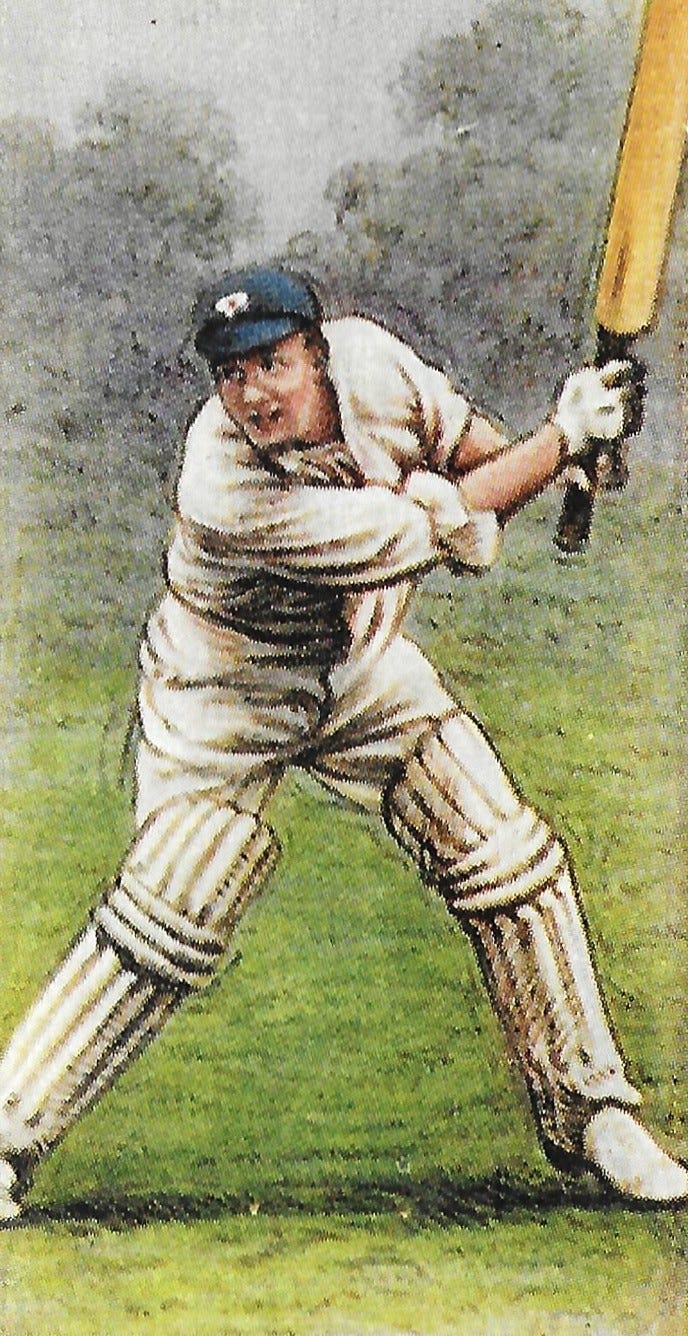
Yes, I have acquired another scorecard: Surrey v. Yorkshire, 20–23 August 1921—a relic, yellowed and perfumed with time, of cricket’s golden interwar age, when the game was still redolent of Edwardian leisure, and the county ground was a theatre of manners as much as of sport.
On the second day, Edgar Oldroyd, Yorkshire’s middle-order craftsman, compiled his highest score of the season. The newspapers, in their haste, declared him a son of Dewsbury. But he was born in Healey, which is Batley. And Batley, proud and particular, would not have taken kindly to the oversight. In Yorkshire, birthplace is not a detail. To misplace a man’s origin is to misplace his soul.
Monday, August 22, dawned with the sun in a generous mood and the air agreeable as a well-poured pint. Surrey’s cricketers emerged from the pavilion with the gait of men chastened but not cowed. They had been bowled on Saturday out for 129, victims of Wilfred Rhodes’s cunning—a spell of six for 38, delivered with the quiet control of a man who knew the pitch better than the groundsman.
The expectation was that Yorkshire would stride to a commanding lead. But cricket delights in confounding the confident. Hitch and Fender, with ball in hand and mischief in mind, made early inroads. Percy Fender dismissed Robinson and Kilner in his second over, and the crowd, which had settled into the comfort of inevitability, stirred with the delicious unease of unfolding drama.
Then came the partnership that turned the tide—Oldroyd and Rhodes, a duet of contrast and concord. Rhodes, all economy and understatement, and Oldroyd, who played as though each stroke were a sentence in a letter to Batley. Fender demanded vigilance, but Oldroyd responded with a hook of such violence that it seemed a rebuke to the very idea of caution. Jardine, lurking at mid-on, nearly intercepted a rising ball when Oldroyd was 27—a moment that might have rewritten the day’s script. But fate ruled in favour of the batsman.
Oldroyd greeted Lockton’s first delivery with a boundary—a stroke of imperious certainty, as if to say, “I am here, and I intend to stay.” The bowling of Lockton and Peach, pitched on a good length and shaded with guile, subdued the scoring for a time, and Yorkshire, needing but a single to equal Surrey’s total, found themselves becalmed, until at last Rhodes broke the spell with a leg hit of such perfection that it might have been drawn by a draftsman. After two and a quarter hours, Yorkshire were ahead, six wickets intact.
Shortly after reaching his fifty, Oldroyd was badly missed by Knight at second slip—a lapse that would haunt Surrey’s ledger like a smudge on a banker’s balance sheet. But first Rhodes, who had compiled a serene 65 with nine fours—each a statement rather than a shout—was caught at second slip by Abel. The fifth wicket had yielded 146 in an hour and three-quarters.
Another stand followed, between Oldroyd and his captain Burton. For seventy minutes they batted in harmony, adding 91 runs, but then Burton, attempting to drive Lockton, was bowled off his pads for 41. Oldroyd’s innings ended ten runs later, with the score at 324. He played a tired stroke towards cover, and Hitch, diving low, made the catch. Oldroyd had batted three hours and twenty-five minutes that day, in addition to an hour on the Saturday. The body, however willing, must eventually yield. His 144 was a monumental contribution, begun when Yorkshire were eleven for one, and carrying them to 324 for seven. He had two lives, yes, but they were footnotes to a masterclass in judicious hitting.
Yorkshire were bowled out for 388 after tea, and Surrey, asked to bat for an hour and a quarter, responded with 81 for no wicket—a defiant flourish, a last stanza written in haste before the storm. And the storm did come. A thundercloud swept across the ground, and the match was drawn. Yorkshire took just two points, in recognition their first-innings lead. Middlesex, reprieved, went on to win the Championship, despite playing four matches fewer. Cricket is not always just.
But let us not dwell on the ledger. Let us remember instead Oldroyd’s innings—not merely for its numerical value, but for its character. It was an innings of Yorkshire grit and grace, played under a sun that shone on willing and weary alike. And somewhere in Batley, one imagines, the news of his misreported birthplace was met with a tut and a shake of the head. For in Yorkshire, even the smallest detail matters—especially when it concerns one of our own.
 | A guest post by
|