
Maurice at the threshold
The poetry of uncertain beginnings

New from the ACS: Explore our search tool, now live at archive.acscricket.com. It offers a growing index of ACS records and digitised publications, and includes searches of the Women’s Cricket History website. These comprehensive resources are now at your fingertips.
We’re also delighted to share with our readers an exclusive deal with Pitch Magazine for their bumper Ashes issue. Use the code ASHES20 at checkout to get 20% off.
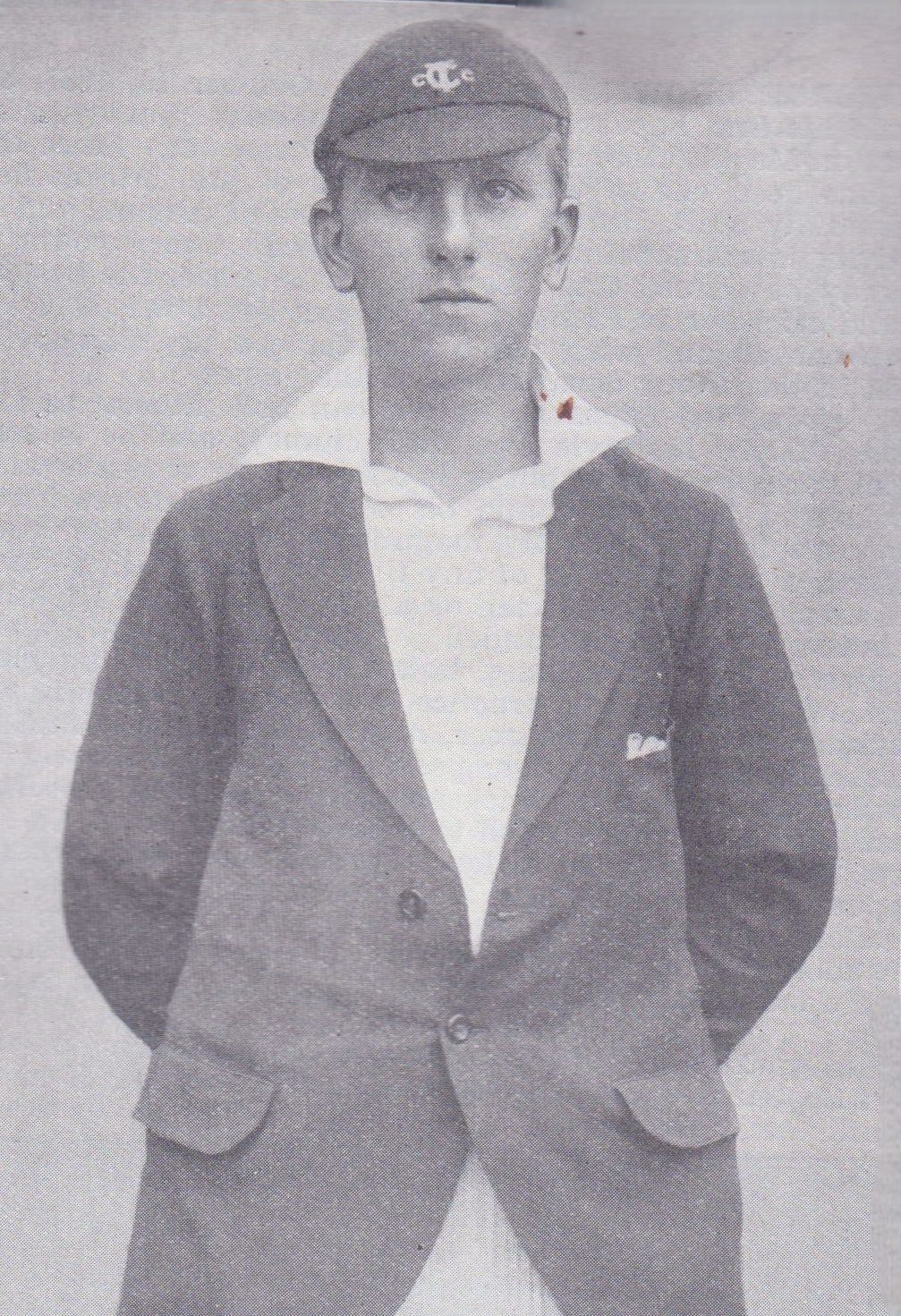
On April 20, 1920, young Maurice Leyland was summoned to the Yorkshire nets, there to be observed by the discerning eye of George Hirst. The grand old custodian of Yorkshire cricket was soon to depart for Eton, where he would tend the cricketing fortunes of the famous school. But before his departure he gave a nod of approval to Maurice, a lad of some promise, already classified as an all-rounder. His leg-spin had been troubling batsmen in the Yorkshire League, and his bat, though not yet commanding, had shown resilience, a stubborn delight in occupation. Against Rothwell he had contributed four wickets for thirty runs, and then, with the bat, an unbeaten 41 that carried his side to victory. It was a performance which suggested a player who might amount to more than the sum of his parts.
He played eight matches played for the Yorkshire Seconds, and although he did not set the world aflame, proved steady and showed an appetite for learning. Recently I came upon a rare scorecard of a remarkable match in which he was involved: Yorkshire Seconds v. Cheshire at Bridlington, dated August 11. The match was a friendly—Yorkshire had yet to enter the Minor Counties competition—but it had the flavour of an earnest trial, the kind of contest in which reputations are forged.
Fresh from a resounding triumph over Lancashire at Harrogate, the Yorkshire reserved entered the match in buoyant mood. Their eleven was sprinkled with new faces, eager to prove their worth. Cheshire, in contrast, were depleted, missing several of their batsmen. Their plight was aggravated by a pitch softened by overnight rain. Four wickets fell for 22 before Jones and Hartley, with bright strokes and a refusal to be cowed, added 57 in half an hour.
Then Watson took the ball, and in eight overs before lunch, on a drying wicket, conjured movement and mischief, capturing five wickets for just six runs. All but two of those eight overs were maidens. Leyland joined the harvest, claiming four for thirty as Cheshire were undone for 99.
Yorkshire’s reply began poorly, three wickets tumbling for 21 before Leyland and Watson steadied matters, the young Harrogate professional batting with good touch for 36. Still, Yorkshire were all out for 103, just four runs to the good.
This appeared to matter little, however, as Cheshire’s second innings was a procession to and from the wicket, four wickets falling at one point without addition to the score. By stumps they were 59 for nine, Bayes of Flamborough bowling with fast right-arm vigour to claim six-for. Maurice managed a wicket, too.
The next morning Yorkshire seemed destined for the easiest of victories. The minor county, with one wicket in hand, had no real prospect of salavation. But a brave last-wicket stand took the score to 77, leaving Yorkshire a modest 74 to win.
Allen and Bell began the chase, but the former was out within three minutes. Then the match became something singular. Cook, with feline agility, brought off several smart catches, Maurice fell for a duck, and by luncheon, the Yorkshire Seconds were all out, losing by fifteen runs. It was a reversal such as reminds us of cricket’s refusal to conform to expectations.
Maurice’s persistence would ultimately be rewarded with selection for Yorkshire’s first-team Championship match against Essex on August 19, deputising for the injured Roy Kilner. It was a modest debut—ten runs, no more—but it marked the threshold of a career. Brighter days would come, though not all at once. Cricket, like life, demands patience, and Maurice’s story was only beginning.
 | A guest post by
|