
Hat-Trick Hero
100 Years Ago: 13-15 May 2025

OBITUARY
The former Cambridge University fast bowler of their great team of 1878, Philip Morton, has died at the age of 67. He took a hat-trick in the University match of 1880. After his University career he played twice for Surrey under the family-residence rule, but the rest of his county cricket was for Norfolk.
SOUTH AFRICAN CRICKET
The South African Cricket Association has approved the appointment of a Board of Control, consisting of five members from each of the major provinces, to manage the game throughout the country. Before now the game has been run directly from the S.A.C.A. in Johannesburg.
Manchester: Lancashire v Scotland (first-class)
Day 1
Dogged Hallows Century
LANCASHIRE 321 (C Hallows 140, J L Hopwood 20, L Green 56; C S Scobie 5/112, C S Paterson 3/41). SCOTLAND 5/2 (C Groves 0*; C H Parkin 2 wkts).
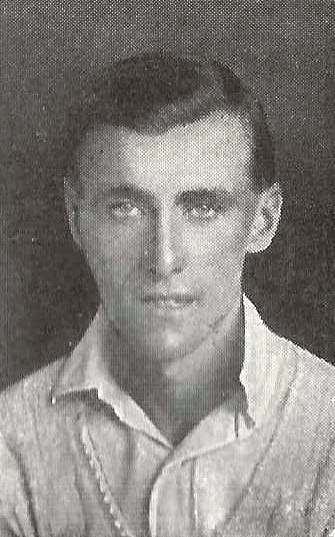
Lancashire’s innings against Scotland was really a story of only two batsmen. Charlie Hallows scored almost half the runs himself opening the innings, making a slow start but then finding some of his strokes and in the end scoring 140 in 4¼ hours. Len Hopwood was run out to end an opening partnership of 38 with Hallows, and the only big partnership was one of 106 for the fourth wicket with Major Leonard Green. Hallows survived one rather difficult chance on 78. He should have scored many more runs, as much of the bowling was inaccurate and he failed to take full toll of the bad balls. Most of the wickets fell to the leg-spinner Charles Scobie and the medium-pacer Charles Paterson, and they were backed up by excellent fielding throughout the day.
Scotland went in for ten minutes before the close and suffered a severe blow when their premier batsman, John Kerr, was caught off Cecil Parkin without a run on the board, soon followed by his partner Daniel Mackay.
Day 2
Scottish Batting Failure
LANCASHIRE 321. SCOTLAND 52 (C Groves 19, M Patten 17; C H Parkin 4/28, R K Tyldesley 4/4) and (following on) 195 (J Kerr 31, C Groves 64. G P Burt 26, M Patten 26; C H Parkin 5/49, J L Hopwood 2/28). Lancashire won by an innings and 74 runs. Overnight score was: Scotland (1) 5/2 (Groves 0*).
Scotland never got over their bad overnight start in the first innings and were bowled out before lunch for 52 and forced to follow on. The only resistance came from Charles Groves and the former Oxford University wicket-keeper Mark Patten, the next-best score being 7. Cecil Parkin was their main adversary, but when Dick Tyldesley was rather belatedly brought on he whipped out the tail to finish with figures of four wickets for 4 runs. The batsmen had no idea of footwork against his bowling. The last six wickets fell for only 5 runs, the last four all at 52.
Scotland pulled themselves together and did better the second time, with John Kerr making a sound 31, and Groves was again the top scorer, batting for almost two hours to make 64; they put on 59 together for the second wicket. But the deficit was too great and they could not avoid the innings defeat in two days. Tyldesley took only one wicket this time, but that was the fault of the Lancashire fielders — remarkably, in one of his overs three chances went down.
Lord’s: Middlesex v Somerset
Day 1
White Restricts Middlesex
SOMERSET 123 (A E S Rippon 15, G E Hunt 35*, M L Hill 16; E J North 3/22, A R Tanner 3/39, J W Hearne 4/34). MIDDLESEX 138 (H W Lee 18, J L Dales 40, C N Bruce 41; J J Bridges 2/30, J C White 6/43, H E Hunt 2/12).
Run-scoring was difficult today for both sides against good bowling attacks on a pitch that was a little uneven in pace and sometimes bounce as well when it dried, and the outfield heavy. However, the day’s cricket was superbly fought and very exciting on a warm day after rain. The Somerset innings began with a useful opening partnership, but went from 26 without loss to 50 for six, with the right-arm slow-medium bowler Ernest North bowling out three men very well, mainly with off-cutters. Guy Earle hit a huge six over the scoreboard on the grandstand at square leg and the ball could not be found. George Hunt saved the innings from disaster with a sound innings, with some big hits at the end, but six other batsmen were out between 10 and 16. Jack Hearne also bowled well later in the innings of 123, with Hunt left unbeaten on 35. He and Mervin Hill hit well in a last-wicket partnership of 20.
The ball swung about a good deal when Middlesex replied. Horace Dales dug in, but Harry Lee seemed in fine form for 18 before he was brilliantly stumped on the leg side by Hill off the pace of Jim Bridges, who then bowled Hearne without scoring. Patsy Hendren was another batsman who began in good style but then got out unexpectedly, for 13. There followed a fine partnership between Dales, who began to play his strokes, and Clarence Bruce, who took the score to 109 before the fourth wicket fell, when Middlesex looked to be in a strong position. Dales played a good anchor rôle while Bruce was the only batsman of the day able to play a fine attacking game for long. But then the superb bowling of White caused a collapse and Middlesex only just scraped into the lead with eight wickets down. White finished with six middle-order wickets for 43 runs, swinging and flighting the ball skilfully, and thanks to him the Middlesex lead was kept down to only 15.
Day 2
Hearne Prominent as Middlesex Win
SOMERSET 123 and 119 (A E S Rippon 16, A Young 19, T E S Francis 35; N E Haig 4/41, J W Hearne 5/17). MIDDLESEX 138 and 106/1 (H W Lee 27, H L Dales 53*, J W Hearne 22*). Middlesex won by nine wickets. Overnight score was: Middlesex (1) 138 all out.
Poor batting and poor luck sank Somerset within two days. They began well enough, but when the opening pair of John Daniell and Stanley Rippon both went at 28, they sank into negatively. Jack Hearne bowled poorly before lunch, but Tom Francis in particular allowed most of the rubbish to go unpunished. He held the innings together in one sense, but in scoring 35 in almost two hours he allowed the bowlers to get on top of the batsmen. Hearne, no doubt encouraged by Francis’s passivity, bowled superbly after lunch and cut through the Somerset tail, the last five wickets falling for 7 runs, all to Hearne in 14 balls for one run. Ernest North and Arthur Tanner both helped by taking brilliant catches.
The wind down the pitch had helped the Middlesex bowlers, but when Somerset batted it had dropped, and the pitch became easier for batting after the use of the roller. Harry Lee and Horace Dales did not rush matters, but batted carefully in scoring 78 for the first wicket, and when Lee was out Jack Hearne came in to finish the job with Dales. Their policy was to block out Jack White, who bowled 14 overs for 18 runs, and pick off the other bowlers without taking risks, and it succeeded perfectly as Middlesex made sure of their first championship victory of the season.
Northampton: Northamptonshire v Hampshire
Day 1
Wright Rolls Hampshire
HAMPSHIRE 76 (A L Hosie 15, J A Newman 28; P A Wright 5/42, V W C Jupp 3/18) and 5/0 (G Brown 5*, H A W Bowell 0*). NORTHAMPTONSHIRE 211 (C N Woolley 25, V W C Jupp 64, S H G Humfrey 20, J E Timms 19*, A E Thomas 25; G Brown 2/56, G s Boyes 3/59, C P Mead 2/26).
Hampshire were without William Shirley and Ronnie Aird for this match, but that could not excuse their disastrous batting performance on an easy-paced pitch. They lost their first three wickets for 4 runs, two of them to the medium-pace of Philip Wright in his first over, and never recovered. Philip Mead went for 7 and only Alexander Hosie and Jack Newman reached double figures. The lowest point was when seven wickets were down for 38, but Newman received solid defensive support from the debutant Arthur Judd in adding 34 for the eighth wicket. Wright bowled excellently throughout the innings to take five wickets, and was well backed up by Vallance Jupp with three.
Hampshire were further hindered when Alec Kennedy strained his knee and could only bowl three overs. Northamptonshire were rather unsteady early in their innings, but Jupp played a fine innings of 64 in an hour and a half before being run out. After a few bits and pieces down the order, the last-wicket pair of Jack Timms, unrelated to Wilfrid, and Albert Thomas added 44 to take the total past 200 and give the home county a rare lead of 135 on the first innings. The Hampshire opening pair safely batted out the final ten minutes of play.
Day 2
Innings Victory
HAMPSHIRE 76 and 83 (A L Hosie 27, A H Kneller 25*, A K Judd 11; P A Wright 2/21, V W C Jupp 2/28, A E Thomas 2/14, W Wells 2/16). NORTHAMPTONSHIRE 211. Northamptonshire won by an innings and 52 runs. Overnight score was: Hampshire (2) 5/0 (Brown 5*, Bowell 0*).
Every so often, perhaps not even once a season, Northamptonshire will cause a major surprise and down powerful opponents or win an innings victory, and this was one of those matches. Hampshire seems to be a team on the decline, but probably few thought that they could be so seriously outclassed by lowly Northamptonshire that they would go down by an innings before lunch on the second day. Beating Derbyshire in their first match was no surprise, but this big victory was.
From the moment George Brown was bowled leg stump by the fourth ball of the day, from Albert Thomas, with no addition to the overnight score, Hampshire never looked like putting up a serious fight. Philip Mead was out second ball, also caught in the slips, without scoring, and Lionel Tennyson completed a pair, out first ball. Only Alexander Hosie of the early batsmen put up any fight, and the highest partnership was 29 for the eighth wicket by two virtual novices, Arthur Kneller and Arthur Judd. Hampshire were twice dismissed for under 100 in the match. The Northamptonshire captain Maurice Fitzroy used his bowlers well — five of them bowled and all took at least one wicket, backed by good fielding. He has certainly begun his captaincy well, winning the first two matches of the season. However, their next match is against Yorkshire . . .
Oxford: Oxford University v Leicestershire
Day 1
Leicestershire Batting Slump
OXFORD UNIVERSITY 212 (C H Taylor 19, J S Stephenson 24, E R T Holmes 22, J V Richardson 23, E P Hewetson 21, J W Greenstock 38, M A McCanlis 20*; A Skelding 4/49, W E Astill 3/47, F Bale 2/39). LEICESTERSHIRE 68/5 (G L Berry 22, S S Coulson 9*, W E Astill 6*; M A McCanlis 2 wkts).
It was summer at Oxford today, with bright sunny weather and a good fast pitch — the first full day’s cricket possible at Oxford this season. The batsmen on both sides seemed unable to adjust to these unfamiliar conditions. Claude Taylor and John Stephenson began well for Oxford, though, with 42 for the first wicket, and Taylor finding some of his long-lost strokes in the process. But the Oxford innings was most notable for the fact that nine batsmen reached double figures, but only John Greenstock at No 10 passed 25. Many of them may have been tied down by the excellent Leicestershire bowling that gave nothing away, and most of the scoring was slow. The highest partnership was 59 for the last wicket, by Greenstock and the debutant Maurice McCanlis, which took the score from 153 to 212.
Leicestershire fared even worse when they batted, with the first three batsmen out scoring only 10 runs among them. Les Berry did best with 22, and five wickets went down for 55, leaving Leicestershire with a fight on their hands tomorrow.
Day 2
Guise and Holmes Lift University
OXFORD UNIVERSITY 212 and 191 (J L Guise 46, E R T Holmes 38, J V Richardson 48; A Skelding 4/54, W E Astill 4/56, F Bale 2/22). LEICESTERSHIRE 175 (S S Coulson 33, W E Astill 38; M A McCanlis 3/32, E P Hewetson 2/41, J W Greenstock 2/22) and 8/0 (G H S Fowke 3*, A Lord 3*). Overnight score was: Leicestershire (1) 68/5 (Coulson 9*, Astill 6*).
Batsmen continued to struggle for runs at Oxford today, and heavy dew had made the pitch slow. The Leicestershire overnight pair of Sydney Coulson and Ewart Astill did a good job, playing themselves in very carefully for a while before Astill began to open out, and they eventually put on 59 for the sixth wicket. Coulson went on to bat for two hours for 33. Leicestershire finished 37 behind.
Alec Skelding soon fought back, bowling out the University’s opening pair for 19 runs on the board, and the match was now at the crossroads as the county moved in for the kill. But then came the turning point, as the next pair of the captain John Guise and Errol Holmes fought back, although both were dropped at 3 and 14 respectively. They made Leicestershire pay with a very sound partnership of 77 in just under an hour and a half. Holmes was the more fluent of the two, but Guise also played very commendably for 46 in two hours. They were backed up well by James Richardson in a positive 48 in just over an hour, and so Oxford were able to set Leicestershire 229 to win, the highest total of the match. Their openers survived 15 minutes before the close.
Day 3
Leicestershire Batting Fails
OXFORD UNIVERSITY 212 and 191. LEICESTERSHIRE 175 and 126 (A Lord 21, W E Astill 29; E P Hewetson 2/30, J W Greenstock 3/28, J L Guise 2/8, E R T Holmes 3/10). Oxford University won by 102 runs. Overnight score was: Leicestershire (2) 8/0 (Fowke 3*, Lord 3*).
Good bowling against weak batting and despite poor catching gave Oxford a comfortable victory, their first of the season, over Leicestershire today. Leicestershire began well enough, with Major Gus Fowke and Albert Lord putting on, with the help of 11 extras, a laborious 38 for the first wicket, although Lord survived two chances. After they were separated, though, Leicestershire never really looked like winning. Four wickets were down for 59, and then Ewart Astill took up the challenge with an aggressive innings that kept the county’s faint hopes alive. He finished as top scorer in both innings, and once he was out for 29 it was only a matter of time. Four bowlers shared the wickets, with the left-arm spinner John Greenstock looking the best of them, and suffered two dropped catches. Errol Holmes showed his talents with the ball, taking three wickets at a lively pace.
The Oval: Surrey v Gloucestershire
Day 1
Century Before Lunch
SURREY 416/8 (J B Hobbs 104, A Sandham 32, A Jeacocke 30, T F Shepherd 51, D R Jardine 22, H G Baldwin 63*, H A Peach 62; C W L Parker 3/81, E G Dennett 4/68). GLOUCESTERSHIRE to bat.
The conditions were the sort that bowlers in teams visiting the Oval dread, with fine weather and a typical Oval pitch now quite recovered from all the rain earlier in the month. Surrey duly cashed in, and Jack Hobbs in particular. Hobbs and Andy Sandham began with a partnership of 81 in 1¾ hours, and soon after Alfred Jeacocke joined him Hobbs reached his fifty and opened out brilliantly. He went from 50 to 100 in about half an hour in a series of superb strokes, at one stage scoring 22 runs in an over from Percy Mills. He was out immediately after lunch, though, going for a big hit off Charlie Parker and skying the ball easily back to the bowler. This was the 114th century of his first-class career.
After that all was anticlimax, although Tom Shepherd was the best of the rest with 51 very stylishly scored in just over an hour. Harry Baldwin played steadily, while Alan Peach came in to hit, and did so in excellent fashion, hitting 62 in just over an hour. It wasn’t quite a slaughter, but it was a very testing time for the visiting team, and they came out of the ordeal with honour, Parker and George Dennett in particular staying steady and accurate, although the pitch gave them no help. The fielding remained good, with Wally Hammond at extra cover quite brilliant.
Day 2
Fender Bowls as Gloucestershire Fall
SURREY 416/8 dec. GLOUCESTERSHIRE 187 (A E Dipper 48, M A Green 27, P F C Williams 35, G Wedel 20; W C H Sadler 3/30, H A Peach 4/55) and (following on) 154 (A E Dipper 40, M A Green 64*, P T Mills 21; P G H Fender 6/31). Surrey won by an innings and 75 runs. Overnight score was: Surrey (1) 416/8 dec.
Conditions were perfect for batting at the Oval again yesterday, but unfortunately nobody told the Gloucestershire players that, as they were bowled out twice in a day. They may have been dispirited by the loss of their captain, Colonel Douglas Robinson, who was unable to bat owing to illness, and it became worse when in the second over Wally Hammond, opening the innings with Alf Dipper, was brilliantly stumped by Bert Strudwick off the fast-medium bowling of Alan Peach without a run on the board. Hammond was to go on to collect a pair all on one day in the second innings, when he was bowled by Bill Sadler. Alf Dipper played as soundly as one would expect from him, and steadied the innings with help from the more aggressive and powerfully built Michael Green and then Peter Williams. But nobody was able to fill the need for a really big innings and Gloucestershire found themselves following on 229 runs behind. Sadler and Peach bowled particularly well, working up a good pace and finding some life in the pitch.
Hammond again fell immediately, but Bernie Bloodworth had a most unusual experience — in his innings of 11 he survived chances in the field to two outstanding fielders in Andy Sandham and Percy Fender before being brilliantly stumped by Strudwick. Again Dipper and Green stood firm, this time making 46 for the third wicket before Dipper was again out in the forties. After that only Percy Mills was able to support Green for long, and Fender completed the innings victory for Surrey with a final bowling spell of 5.3 overs, in which he took four wickets for 2 runs. Green was unbeaten at the end with a fine innings of 64 in almost two hours. Strudwick had a fine day behind the stumps, claiming five victims.
Hove: Sussex v Essex
Day 1
Moderate Batting
SUSSEX 202 (E H Bowley 31, T E R Cook 30, A E R Gilligan 33, J Langridge 30, M W Tate 23; G M Louden 2/51, J W H T Douglas 2/30, A B Hipkin 3/46, H J Palmer 2/23). ESSEX 57/2 (J R Freeman 33*, C A G Russell 9*; M W Tate 2 wkts).
Sussex, batting first, turned in one of their typically moderate batting performances and only a useful last-wicket partnership enabled them to pass 200. The top scorers of the innings made 31, 30, 33 and 30 respectively. Ted Bowley made the 31, a dogged innings lasting nearly two hours, and five men were out for 99, but as so often with Sussex, the lower half of the batting order proved as good (or as moderate) as the top half. The highest and best innings was the aggressive 33 of the captain, Arthur Gilligan. James Langridge played a sound and promising innings of 30. The Essex bowling was good, but so was the pitch.
Laurie Eastman and John Freeman survived Maurice Tate’s opening spell, but when he came back again just before the close he removed Eastman and Jack O’Connor in the same over, which left the two teams apparently well balanced at the close.
Day 2
Poor Batting
SUSSEX 202 and 88 (E H Bowley 13, A F Wensley 19; G M Louden 4/41, J W H T Douglas 4/29). ESSEX 109 (J R Freeman 52, C A G Russell 20; M W Tate 5/43, G R Cox 4/18) and 87/5 (L C Eastman 37, M S Nichols 13, J W H T Douglas 12*, A S Grimwood 6*; M W Tate 3 wkts). Overnight score was: Essex (1) 57/2 (Freeman 33*, Russell 9*).
The pitch was not so easy today, and the batting did not rise to the occasion, with 23 wickets going down during the day for only 227 runs. John Freeman and Jack Russell, the Essex overnight pair, began well, taking the score to 80 before they were separated. Freeman stood head and shoulders above all the other Essex batsmen. Maurice Tate and George Cox between them then smashed through the rest of the innings, the last eight wickets going down for only 29 runs and leaving Johnny Douglas at No 6 left stranded with 8 not out.
“Anything you can do, we can do worse” might well be the Sussex motto they batted dismally in their second innings against Douglas and George Louden. Seven wickets tumbled for 43 before the later batsmen, led by Bert Wensley, managed to double the score. Their first-innings lead of 93 was crucial, as they set Essex 182 to win, and at the close of play Essex were at a disadvantage, their first five men all gone, mainly to the inevitable Maurice Tate. Johnny Douglas was still there at the close, but he does not have much batting left and Sussex hold the advantage.
Day 3
Douglas and Hipkin in Great Essex Victory
SUSSEX 202 and 88. ESSEX 109 and 182/8 (J W H T Douglas 40, A S Grimwood 15, A B Hipkin 46*; M W Tate 6/60). Essex won by two wickets. Overnight score was: Essex (1) 57/2 (Freeman 33*, Russell 9*).
Against all expectations Essex pulled off a remarkable victory over Sussex today. They began the final day needing to score another 95 runs with five wickets left, the target being 182, and Johnny Douglas was still at the crease with the debutant Alfred Grimwood. Grimwood played his part gallantly with 15 of a dogged, determined partnership of 43 for the sixth wicket with Douglas, but then he and Jimmy Cutmore were out in quick succession — 115 for seven. Joe Hipkin now joined Douglas, and they took the score to 140 before Douglas was prised out, caught at slip off Tate for 40 in almost 3½ hours. They had added 43 in 100 minutes. With another 82 needed to win and only two tail-end wickets left, all seemed lost for Essex.
But Hipkin seemed to decide that the only possible chance of victory was by hitting out, so he opened his shoulders and did that, time and again, while his partner George Louden stood firm. Hipkin’s previous best first-class score had been 31, but now, when it was most needed, he reached 46 and richly deserved to reach victory and his fifty with a four. But Louden had the honour of hitting the winning runs and Essex secured their second victory against all the odds in the new season. Last year they only managed two wins in the whole season. Maurice Tate, the usual Sussex match-winner, was bowled almost into the ground in Gilligan’s vain effort to win the match for Sussex, bowling 44.2 overs in the innings for 60 runs and six wickets.
Worcester: Worcestershire v Yorkshire
Day 1
Pearson and Kilner
WORCESTERSHIRE 213 (F A Pearson 70, M K Foster 30, H O Rogers 30, G C Wilson 30; G G Macaulay 2/48, R Kilner 5/74, W Rhodes 2/19). YORKSHIRE 81/0 (P Holmes 51*, H Sutcliffe 25*).
The Worcester ground has now recovered well from the floods of last year and the recent heavy rains, although the outfield is still rather heavy. The home side’s innings began with Dick Pearson in excellent batting form, and partnered by Charles Tarbox, whose success in his last match did not inspire him to score more than 1 run in the opening partnership of 25. James Smith at No 3 took almost an hour to score 7, so at this stage the Worcestershire batting was Pearson all the way. In 2¼ hours he scored 70 out of 112, but the home side struggled after his dismissal. Strangely, three batsmen all scored 30, including the last man, Cliff Wilson, who came in at 176 for nine and hit powerfully to take the score to over 200, a good effort for a weak team against the Yorkshire attack. Roy Kilner was the backbone of the bowling, and his five wickets all came from the top seven in the Worcestershire batting order. The pitch was easy-paced and none of the bowlers had any real help from it.
Yorkshire had an hour to bat before the close, and Percy Holmes and Herbert Sutcliffe made good use of it, scoring 81 together without being parted, with Holmes especially in fine fluent form. No doubt they will be expecting to record another of their century opening partnerships tomorrow.
Day 2
Macaulay Bowls Yorkshire to Victory
WORCESTERSHIRE 213 and 65 (M K Foster 25; G G Macaulay 7/20). YORKSHIRE 293 (P Holmes 71, H Sutcliffe 55, E Oldroyd 53, E Robinson 36*; H O Rogers 8/85). Yorkshire won by an innings and 17 runs. Overnight score was: Yorkshire (1) 81/0 (Holmes 51*, Sutcliffe 25*).
Percy Holmes and Herbert Sutcliffe recorded their 29th three-figure opening partnership this morning as they put on 118 before Holmes was out for a very fluent 71 in an hour and a half. He became the first wicket of Harry Rogers, who bowls left-arm medium pace. He was very accurate today and swung the ball considerably; it was a fine performance to take eight for 85 against a side like Yorkshire. Fred Root, perhaps tamed by Holmes and exaggerating his leg-theory so much that he lost accuracy, was for once rather ineffective. Yorkshire batted consistently down the order, but only Edgar Oldroyd with a steady fifty and Emmott Robinson at the end played innings worthy of note. Yorkshire took the lead with six wickets in hand and eventually finished 82 runs ahead — not too bad an achievement for Worcestershire, who often fear being hundreds of runs behind strong opponents.
However, if this was an achievement, the shocking Worcestershire collapse in the second innings wiped out its value. George Macaulay had done little in the first innings, but now he bowled to deadly effect and Worcestershire collapsed pitifully. Macaulay very quickly bowled Pick Pearson, the first-innings hero, for 3, and then ripped into the middle order. The only batsmen to reach double figures was Maurice Foster, the captain, who went in at 16 for two and left at 52 for five, lbw by Macaulay. On his dismissal the rest of the side apparently thought there was no point in staying and the innings folded for 65 before the close, batting for only two hours and giving Yorkshire an innings victory. Macaulay’s seven wickets cost only 20 runs.
State of play
The infant County Championship table shows five counties with 100 per cent records. Surrey and, surprisingly, Essex and Northamptonshire have all won outright two matches out of two; Yorkshire have won two out of three, with one no result; and Kent have won their only championship match so far. We will see how many of the five still maintain their 100 per cent record after the coming round of matches.
There are no Big Six encounters in the next round, these counties preferring to play their most lucrative matches against each other at a more popular time during the season, but the surprise joint table-toppers, Essex and Northamptonshire, will have their quality tested with matches against Middlesex and Yorkshire respectively. Essex were surprise winners of their first match against Middlesex at Lord’s earlier this week; now they have their return match at home, and no doubt Middlesex will be very determined to avenge that defeat.