
A special day for Len
Hutton's hundredth

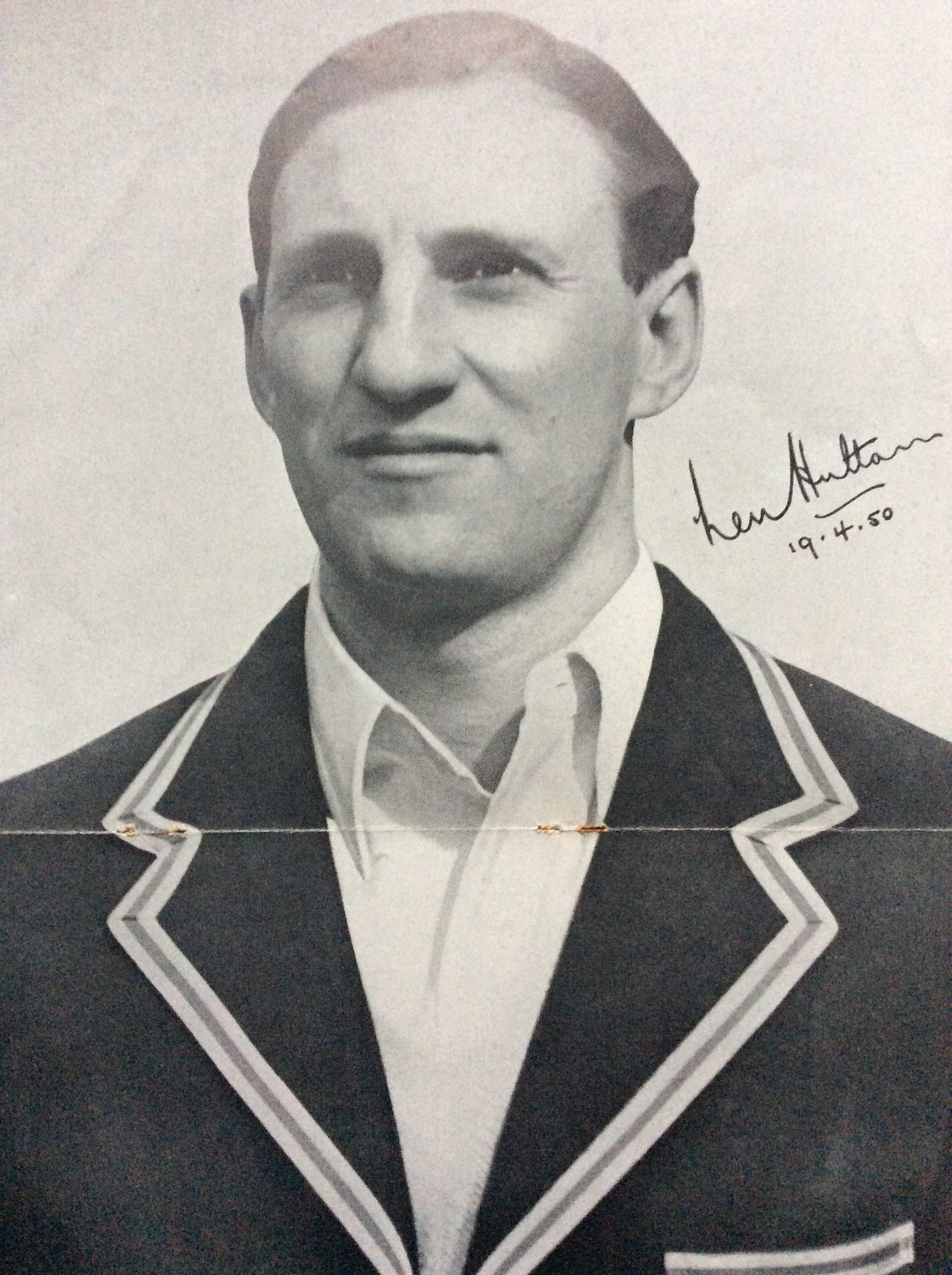
Leafing recently through a scrapbook from 1951, its pages heavy with reports of Yorkshire’s season, I stopped—how could I not?—at the account of July 16 at the Oval. Len Hutton had already inscribed his mastery upon the ledger of Surrey’s great amphitheater: 1,647 runs at the princely average of 105.37, including three double centuries, each wrought for England, monuments of patient artistry. The ground had become his private atelier.
On the Saturday Yorkshire’s bowlers had dismissed Surrey for 156, a modest total that left Hutton and Lowson to occupy the crease for ninety minutes before a crowd of fifteen thousand. The Surrey attack, usually so resourceful, could not prise a wicket, and so Hutton went to bed 39 runs short of his hundredth century, ready to join the select company of twelve who had preceded him.
After Sunday’s rest, Monday dawned, and with it the hush of expectancy. One imagines Hutton’s nerves, never betrayed in gesture, but taut beneath the surface. His batting that morning was a study in concentration, the very essence of his approach to occasions of weight. The ritual was familiar: the habitual touch of the cap before taking guard, the contemplative survey of the pitch between deliveries, the refusal to play any stroke not chosen by his own judgment, or to run any but the most carefully measured singles. This was Hutton in earnest, a craftsman bent upon business.
Seventy minutes in, his score stood at 96. Then came the half‑volley outside off stump, a ball that demanded the cover drive. Hutton’s bat, straight and commanding, sent it racing to the boundary, and the spectators rose as one, applauding before the ball had even crossed the rope. Hutton raised his bat, lifted his cap in acknowledgment, and, with characteristic composure, prepared himself for the next delivery.
Between 100 and 150, he allowed himself a rare indulgence. He struck five of his twelve boundaries in that passage, strokes of enjoyment rather than necessity, as if momentarily freed from the weight of achievement. For once he got carried away: Attempting to drive Lock into the pavilion, he was bowled for 151. But his innings had already entered the annals.
Hutton’s first century had come almost exactly seventeen years before, on July 26, 1934, against Worcestershire. He would score another 128 centuries, three more than the legendary W.G. Grace, across twenty‑one years interrupted by war and injury. World War II stole from him seasons of youth; a broken arm forced him to remodel his technique, adapting art to circumstance. Yet through adversity he emerged not diminished but deepened. His batting acquired a resilient gravity that made him a player of destiny.
 | A guest post by
|