
A Remarkable Life
Brian Sanderson on the odyssey of Geoffrey Keighley

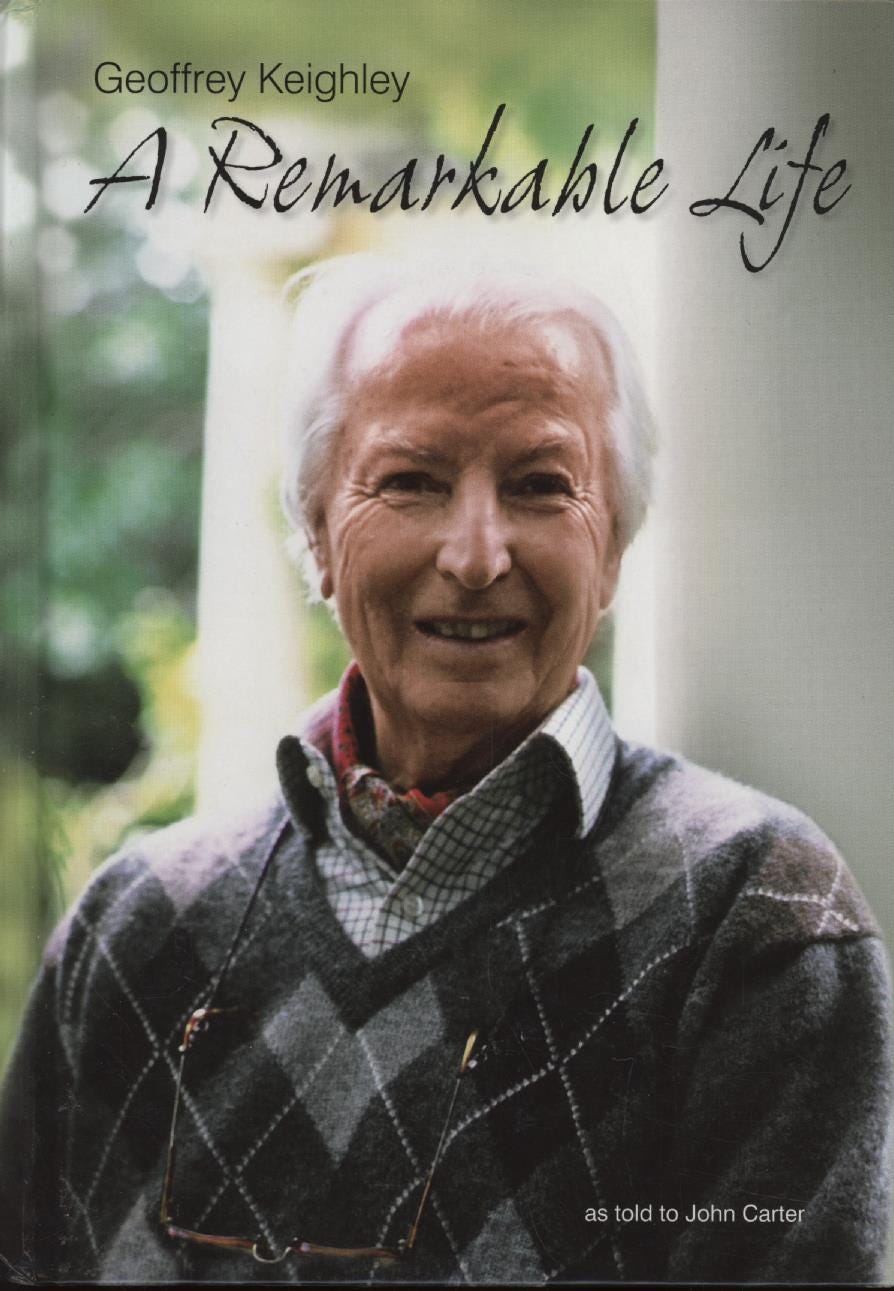
About three years ago I came upon a book devoted to Geoffrey Keighley, whose career with Yorkshire flickered briefly yet brightly between July 1947 and July 1951. His story begins in Nice, France, where he was born on January 10, 1925—a child of Bradford parents who happened to be holidaying on the Riviera. Thus Keighley entered the world a paradox: a full-blooded Yorkshireman who took his first breath under clear Mediterranean skies. He was destined to live a life of contrasts.
It was his mother who, with foresight, arranged for the boy to be coached by none other than Herbert Sutcliffe. Imagine the scene: Sutcliffe, the paragon of Yorkshire batsmanship, imparting his creed of discipline and rectitude to a schoolboy whose destiny was unformed. Keighley absorbed his lessons, and at Eton rose to captain the First XI, a role demanding not only skill but the authority of character. In 1947 he shared a second-wicket stand of 226 with Tony Pawson. He went on to play 65 first-class matches, to open the batting with Len Hutton, and to dine at Hutton’s own table—a privilege that placed him in the very sanctum. He even captained and counseled a young Fred Trueman, when the fiery one’s volcanic energies were only beginning to stir.
Keighley’s tale contains moments of legend. In 1950, playing for the Combined Minor Counties, he scored 92 against the West Indians and, in so doing, became perhaps the first English batsman to unravel the mysteries of Sonny Ramadhin. Ramadhin’s spin was sorcery, but Keighley learnt to read his hand with patience and clarity.
I recently acquired a rare scorecard from Old Trafford, dated 29–30 May 1950, when Lancashire Seconds met Yorkshire. Keighley was captain; in form after a century against Cheshire, he chose to bat. With Billy Sutcliffe he added 120 for the second wicket, his own contribution a polished 105. Yorkshire reached 267, but Lancashire’s attack—led by two future England bowlers, Brian Statham and Malcolm Hilton—was irresistible. Between them Statham and Hilton claimed thirteen wickets, as Lancashire triumphed by five. Yet the scorecard is more than numbers; it is a relic of a contest in which Keighley stood tall against the gathering storm of England’s next great fast bowler.
Offers of captaincy came later—from the MCC, from Yorkshire, and from Middlesex. But by then Keighley had turned away from cricket. He was admitted to the bar, only to abandon the law for the wide horizons of New South Wales, where he became a sheep farmer. Thus the boy born in Nice, the batsman in Yorkshire, the barrister in London, the pastoralist beneath the southern stars. His life was a tapestry woven of contrasts, each thread vivid and distinct from the last.
On July 14, 2005, Geoffrey Keighley died in New South Wales after a long struggle with cancer. He had lived fully, richly, variously. Cricket was but one chapter, but it was adorned with Sutcliffe’s tutelage, Hutton’s companionship, Trueman’s apprenticeship, and Ramadhin’s unmasking. It reminds us that careers are measured not only in averages and aggregates, but in the human odyssey that surrounds them and gives them meaning. In Keighley’s life, as in cricket itself, permanence lies not in the statistics but in the poetry of experience.