
A day for Ernest
1 May 1929

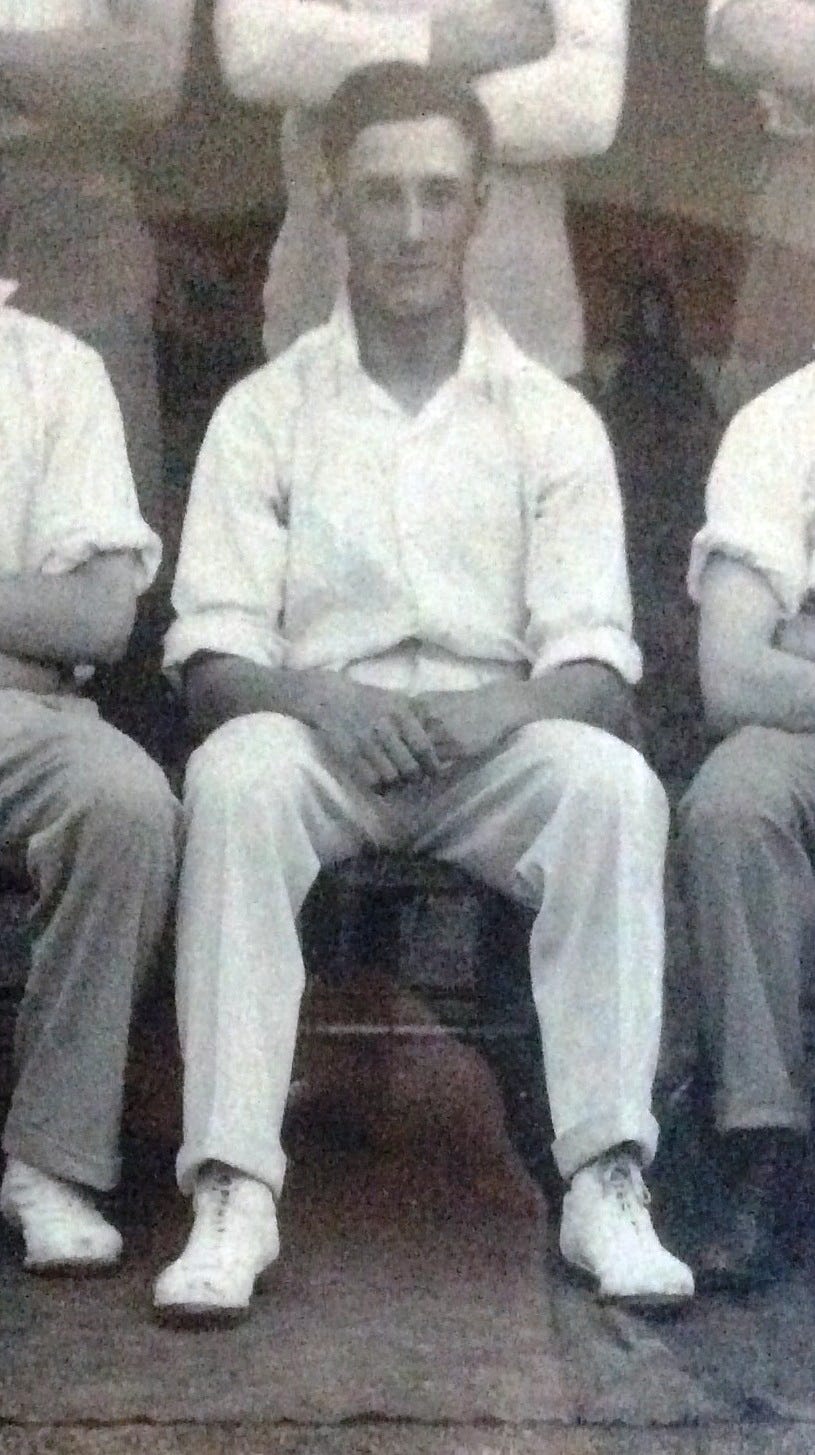
Cambridge, 1 May 1929: a day of beginnings, but also of endings—of quiet rituals unfolding against the louder murmurs of change. Yorkshire, that flinty bastion of northern pride, had descended upon the university greens, bringing not just a team but a tradition, a temperament, a sense of purpose. The quadrangles stirred to the sound of bat on ball, as they had for generations, but the game itself was in the midst of a subtle upheaval.
The Advisory County Cricket Committee, in its perennial quest to balance bat and ball—or, perhaps, to be seen to do something—had enacted a trio of reforms. The stumps were now an inch taller and an inch wider, a concession to bowlers aggrieved by the tyranny of the flat track. More provocatively, the leg-before law had been revised: a batsman could now be dismissed even if the ball had first grazed bat or glove. It was a ruling that would have made W.G. Grace harrumph into his beard. And, finally, a ball that had yielded 150 runs could be replaced with a new one—a belated acknowledgment that leather, like patience, wears thin.
The morning was cold, the sort of chill that clings to stone and scholarship, and makes one question the wisdom of early-season fixtures. Yorkshire won the toss and chose to bat, but the usual sentinels—Holmes and Sutcliffe—were absent. Sutcliffe’s shoulder still bore the bruises of Australia’s hard pitches, and Holmes had been laid low by a motor accident in York.
In their stead came Arthur Mitchell and Edgar Oldroyd, the latter a batsman of quiet virtues and unshowy resolve. Oldroyd had begun a season with a century once before; now, with the air brisk and the ball lively, he did so again. His 111 was a study in clarity—ten boundaries, no false strokes. The ball to him seemed less adversary than accomplice.
Mitchell, too, looked destined for a hundred, until cricket’s capricious gods intervened. A miscued drive to mid-off, a fumbled chance, a moment’s hesitation—and the bails were off before he could reclaim his ground. Run out for 85, he departed with the rueful glance of a man who had glimpsed glory and found it elusive.
Two wickets fell quickly thereafter, and into the fray stepped the young amateur Ernest Sheepshanks—a name you might find Trollope or Thackeray. Although then in residence at Trinity College, he wasn’t quite at home to begin with, and was missed in the slips early on; but thereafter he played with a coolness that belied his inexperience. His 26 was not substantial, but it was stylish: the bat straight, the swing free, the manner unhurried. He looked, for a moment, as if he belonged.
By stumps, Yorkshire had compiled 385. They would go on to reach 420—a total bespeaking resilience and depth, even in the absence of their titans.
But the true poignancy of the day lies not in the scorebook, but in the fate of Sheepshanks. This was to be his only first-class match. He would not return to the crease. Instead, he joined Reuters, and was dispatched to cover the Spanish Civil War. The crack of the bat gave way to the crack of the rifle. He died when a shell landed in front of the press car he occupied. Another passenger escaped with a head wound: His name was Kim Philby, a man who played a longer game, and a darker one.
And so our story, which began with the rustle of reform and the hopeful tread of young men on grass, ends in the thunder of war and the shadow of espionage. Cricket, like life, offers no guarantees. But for a few hours on a May morning in Cambridge, Ernest Sheepshank played with grace, and the game bore witness.
 | A guest post by
|