
A colonel in whites
Brian Sanderson on Ronald Stanyforth
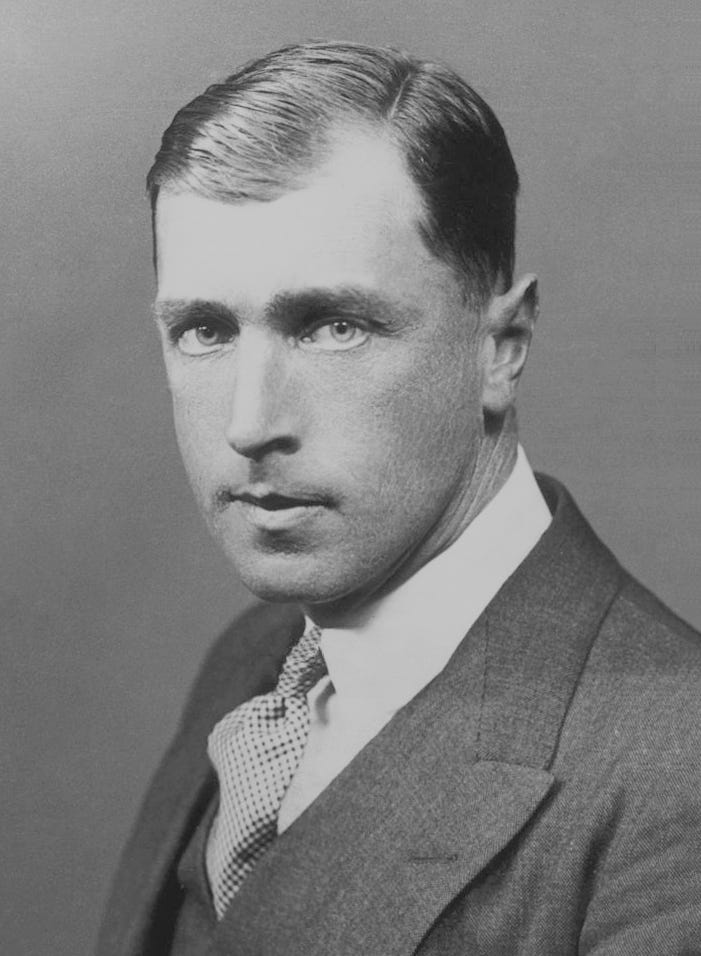
Yesterday, in the mellow hush of late summer, I found myself in the Yorkshire Cricket Museum with my colleague Richard Griffiths, arranging an evocative display of cricketing memorabilia. The occasion is the forthcoming one-day international at Headingley on September 2, between England and South Africa. (Please come and say hi if you’re there.) But our thoughts wandered not forward but back—back to a gentleman of curious distinction, who stood quietly and resolutely against the South Africans in a more ceremonious age.
Ronald Stanyforth was not, by the reckoning of averages or aggregates, a cricketer of renown. He played just 61 first-class matches, his career stretching like a thread across the years from 1914 to 1933, interrupted by war and duty, never quite acquiring the prestige of a county stalwart. But two facts about him shimmer with the peculiar charm of cricketing paradox. First, he was appointed captain of England before he had ever turned out for an English county. Second, when he did finally play county cricket, for three matches only, in 1928, it was for Yorkshire. This is remarkable, given that the scene of his nativity, in 1892, was not the northern dales or moors, but London. Thus he breached Yorkshire’s sacred edict: that no man shall wear the White Rose who was not born within its hallowed perimeters. One imagines the committee rooms of Headingley murmuring with disquiet. And yet, somehow, Stanyforth was allowed to pass.
But Stanyforth was more than a cricketer. He was a soldier, a man of service and gravity, who bore arms in both wars and emerged with the rank of lieutenant-colonel. His bearing was quiet, his manner authoritative, his leadership forged not in the nets but in the trenches. These were the qualities, no doubt, which led the Marylebone Cricket Club to entrust him with the captaincy of the 1927/28 tour of South Africa.
Originally it was to fall to Guy Rolf Jackson, a sound and well-credentialled amateur, but illness intervened. A new captain was needed, and so the selectors turned to Stanyforth. If his experience was narrow, his presence was broad. He was a splendid after-dinner speaker—an aptitude not without utility on tour—and yet he possessed that rare ability to command without bluster, to lead without noise.
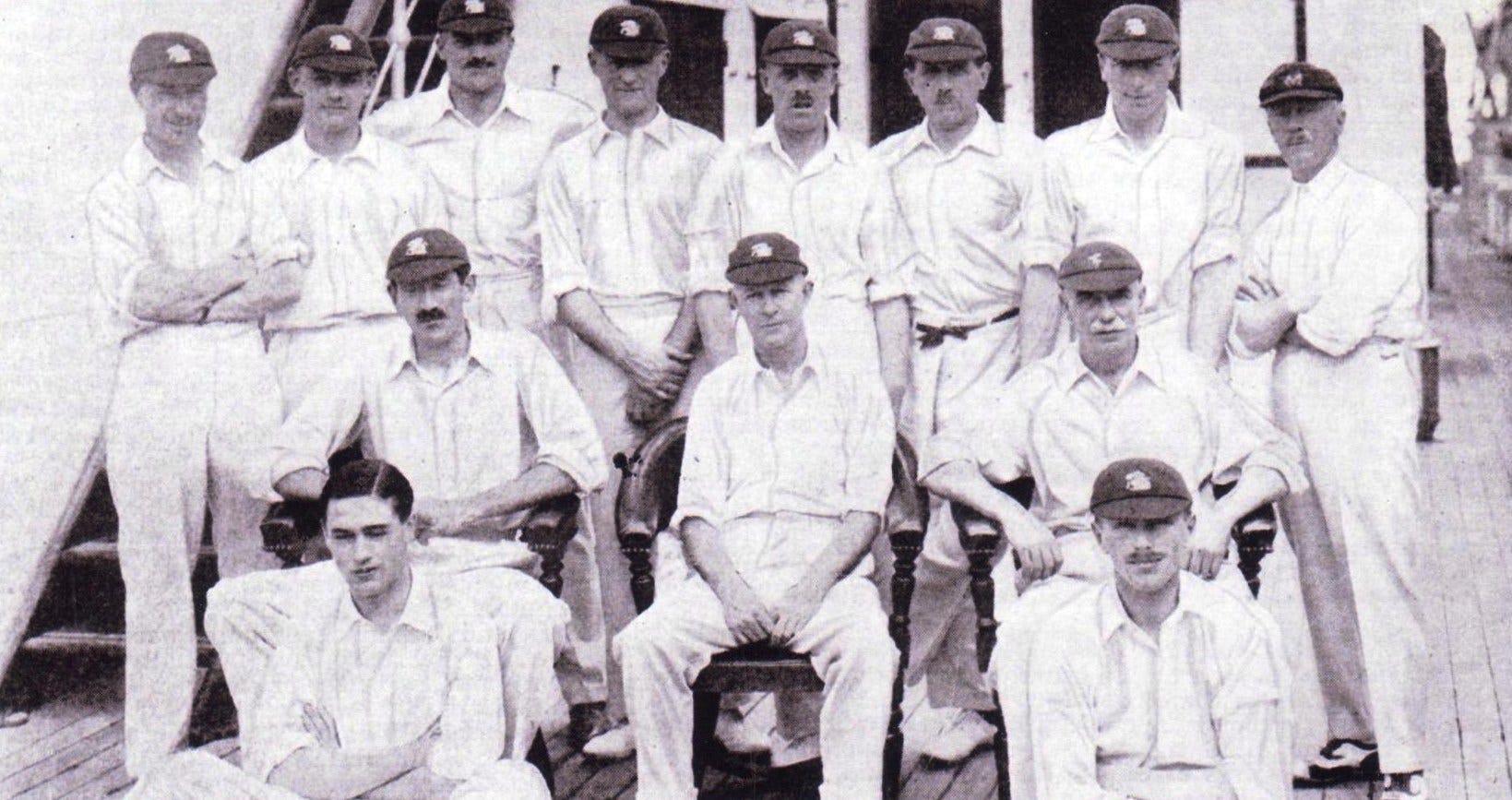
The series itself comprised five Tests, all on matting wickets—those artificial surfaces which turned and bounced with a capriciousness alien to English turf. The series was drawn, and Stanyforth, alas, suffered a blow to the eye that kept him from the finale. His own batting was meagre: thirteen runs in six innings, an average of 2.60. But perhaps it was just as well. For Stanyforth was not merely captain on the field; he was ambassador off it, attending functions, delivering speeches, bearing the weight of England’s cricketing dignity. In addition to these responsibilities, he also kept wicket. By the end of the tour, one suspects, he was a tired man indeed.
His teammates spoke of him with warmth. He was convivial, imaginative, humorous, never frivolous. His captaincy was not of the tactical-genius variety, but of the kind that made men feel steadied, seen and respected. There is a private publication by Martin Howe which captures his essence with diligent fidelity, and I commend it to any reader who wishes to know the man beyond the scorecard.
Later in life, Stanyforth wrote his own slender volume on cricket. It had all the understated elegance of his own character. He died on February 20, 1964, and was laid to rest at St John’s Church in Kirk Hammerton, Yorkshire—a Londoner by birth, a Yorkshireman by grace, an Englishman in spirit.