
A Bradford Drama
August 1949

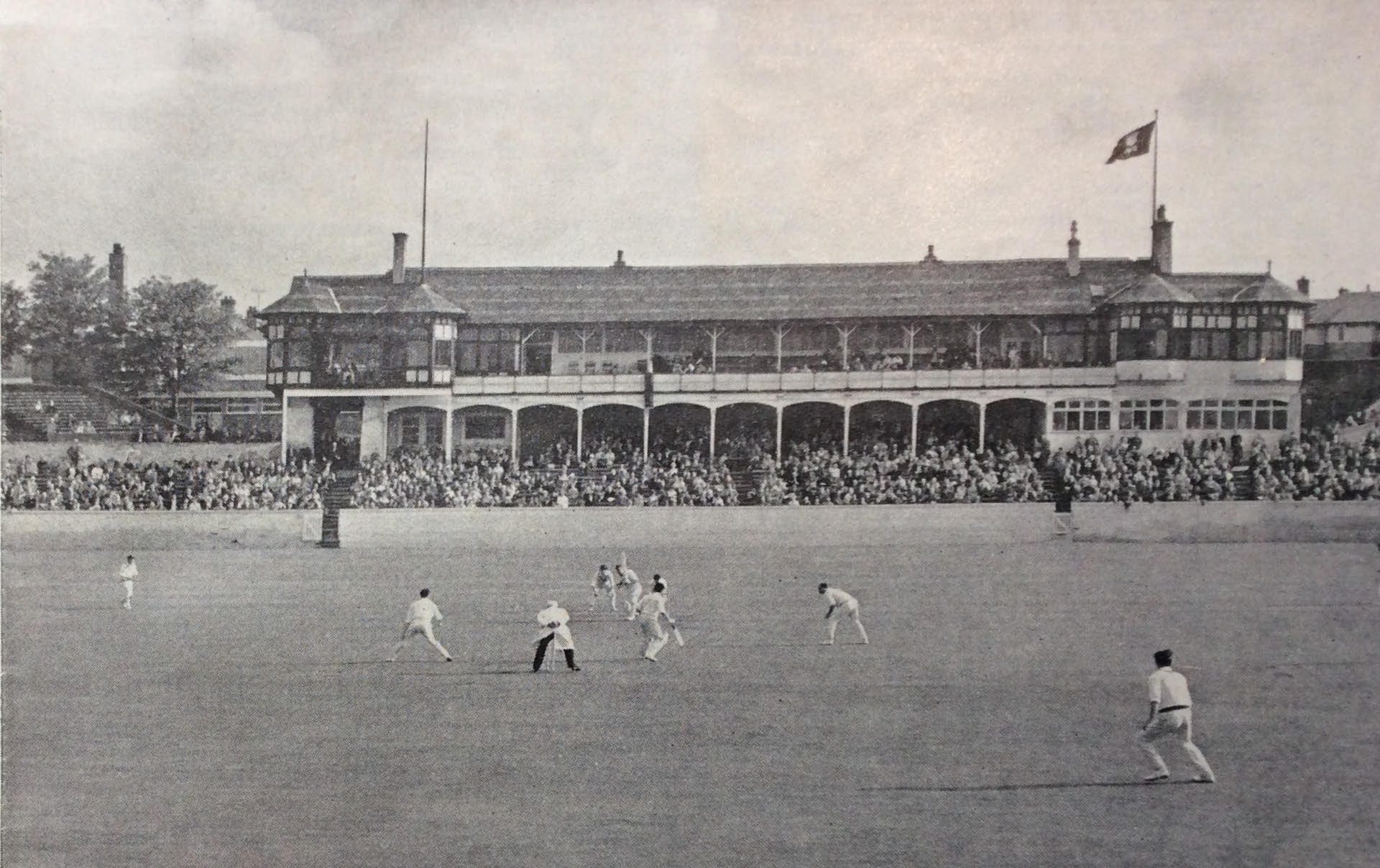
While holidaying this week in the gentle pastures of Somerset, where the air is soft and the cricket slow, I stumbled upon a surprise that quickened the pulse more than any coastal breeze. The Somerset Museum had been gifted a trove of cricketing memorabilia—including some Yorkshire scrapbooks, yellowed and frayed, but brimming with the scent of summers past. I accepted them on behalf of the Yorkshire Cricket Archive with the reverence due to holy relics.
One scrapbook, modest in appearance but rich in memory, revealed a scorecard from Yorkshire’s encounter with Derbyshire at Park Avenue, Bradford, 13 to 16 August 1949. This match I know well, for it unfolded with the rhythm of a symphony. There were the moments of quiet tension, the sudden crescendos, and a finale to leave the audience breathless.
On the opening afternoon, after dismissing Derbyshire for 94, Yorkshire made a commanding reply, and by the close were 276 for three. Half an hour before lunch on the second day, Norman Yardley declared with a lead of 307. His own contribution, 84, was a sonnet to the on-side; seven of his nine boundaries were caressed through mid-wicket and square leg. Ted Lester’s 140 was his highest score of the season—a grand knock by any measure. It included a seven (!!!), a six and seventeen fours.
From there it ought to have been a procession, but Yorkshire’s bowling resources were depleted. Whitehead was nursing an arm injury, and Yardley was hobbled by a sore elbow—and also, more curiously, by a Committee meeting that detained him for an hour and three quarters. In that period he might have bowled a spell, taken tea, and still returned in time for the minutes. So the burden fell to Wardle, Coxon and Close. Johnny Wardle took one end, while Alec Coxon and Brian Close alternated to little effect at the other. Derbyshire, sensing opportunity, rallied to 276 for 4 by close of play.
Then came the final day, and with it, the epic of J.D. Eggar. Over seven hours and a quarter, he accumulated 219 runs with a discipline that bordered on the monastic. Save a few lucky or mistimed strokes, his innings was a monument to concentration and craft. He was last out, and with his departure the stage was cleared for the final act.
Yorkshire needed 185 in 95 minutes—a tall order even in the T20 age. The crowd, a modest 3,000, gathered to see Brian Close take the script and rewrite it in bold strokes. His batting was hurricane stuff: two sixes, one on the pavilion roof, and a flurry of fours that summoned destiny.
Close, in his debut season, just eighteen years of age, had already scored over 1,000 runs and taken 100 wickets, and been picked for England. The curtain had risen on a career that would blend grit and grandeur in equal measure.
There was drama still. Wardle, struck on the mouth by a ball glancing from his bat, retired hurt—two teeth broken, a grim souvenir—but despite the delay, Yorkshire reached their target with five minutes to spare. How I wish I’d been there.
 | A guest post by
|